Tactical Stage Solutions for Diamond Blast Saga
Diamond Blast Saga gives crisp feedback on every move, which is pleasant and slightly misleading: the move that feels best is often the one that leaves the board worst. These diamond blast saga game tips are about the trade every hard stage forces — hitting the objective now against preparing the board for two moves from now.
Judged here on four things only: what the opening layout tells you, how the board feeds its corners, what a rainbow crystal is worth against what it costs, and which objective the stage is actually counting.
- Board
- Fixed grid
- Match
- 3 minimum
- Specials at
- 4 and 5
- Limit
- Moves
01Contents
What is on this page
Five subjects. Each one is here because it changes a decision you make on the board, not because it rounds the list out.
- Reading the opening layoutThe board is static until you touch it, so the first ten seconds are free. What to spend them looking at.
- Peripheral tiles and starved cornersWhy the edges of a grid refill far more slowly than the middle, and what that means for an objective sitting in one.
- Rainbow crystals: hold or spendThe strongest piece in the game, and the one most often wasted on a board that did not need it.
- What each objective is countingFour stage types, four different failure modes, four different correct opening moves.
- Where these notes come fromHow the material is put together and what is deliberately left out of it.
02Opening
Reading the opening layout
Nothing on the board moves until you move, which makes the opening the only moment in the stage where thinking costs nothing. Most players spend it swapping.
What is worth looking for, in order: any place where four or five pieces of one colour already sit within a single swap of each other, because that is a special piece for the price of an ordinary move; then the objective tiles and where they are clustered; then the outline of the board itself, which tells you which columns will move freely and which will barely move at all.
The reason this pays is compounding. A special created on move one is available for the whole stage; the same special created on move eighteen arrives after the board has already been decided. Two or three seconds of looking routinely buys a move, and on a tight stage a move is the whole margin.
03Geometry
Peripheral tiles and why corners starve
Refill on this kind of board is vertical. New pieces enter at the top of a column and fall straight down, and nothing ever slides sideways on its own. That single rule produces almost all the difficulty in the genre.
The middle of a grid is fed by many columns and reshuffles constantly. An edge column is fed by exactly one, and a corner at the bottom of a narrow column may not receive a new piece for a dozen turns. If the stage needs something cleared down there, cascades will not do it for you; you have to route matches toward it deliberately, and you have to start early, because a wasted move at turn three costs nothing and a wasted move at turn twenty-five costs the stage.
The practical habit is to identify the one or two worst-fed cells before the first move and treat them as the stage. Everything else on the board tends to resolve itself.
04Specials
Rainbow crystals: when to hold, when to spend
A rainbow crystal removes every piece of one colour from the board. That is enormous, and it is why most players use it far too early.
Used on move two, it removes whichever colour happens to be numerous, which is rarely the colour the objective needs. Used late, it removes exactly the colour that is still outstanding, and on a quota stage it can close half the requirement in a single turn. The crystal does not decay and does not expire; holding it costs nothing but the board space it occupies.
The exception is the pairing. A rainbow crystal swapped with a line piece converts every piece of that colour into a line clear, which is a different and much larger effect than removing them. If the board offers that pairing and the stage has obstacles scattered widely, take it — that is the single biggest swing available without a purchase.
And a rainbow crystal still sitting on the board when the stage ends is simply lost. Late is right; never is not.
05Objectives
What each stage objective really tests
Difficulty in this genre is rarely about the pieces. It is about which of these the stage is counting, because each has its own way of going wrong.
| Objective | What the stage counts | Typical failure | First move to make |
|---|---|---|---|
| Score target | Points banked before moves run out | Many small matches instead of few large ones | Take the largest available cluster |
| Colour quota | Pieces of one or two named colours | Playing whichever colour is convenient | Ignore every colour but the quota |
| Obstacle break | Crates, ice or chained cells removed | Saving specials for points instead of blockers | Open the worst-fed corner first |
| Item delivery | Objects walked to the bottom edge | Matching beside the object, not beneath it | Empty the column directly below it |
A reading of how the four formats behave in play, not a figure published by any developer. Individual stages vary widely within each type.
06Method
Where these notes come from
One person in Montréal writes this. There is no editorial team, no panel of testers and no scoring system, and it would be dishonest to imply otherwise on a site this size.
What the pages contain is the behaviour of a board format, described from playing it: how refill works, why corners starve, what a special is worth against what it costs. Statements of that kind hold across builds and across titles, which is why they are what gets written here instead of stage numbers.
What the pages deliberately exclude: star ratings, download counts, review scores, tier lists, and any claim about how many titles have been tested. None of it can be confirmed by a reader and all of it ages badly on a static page.
Anything specific to one app — price, offline support, install size, ad model — belongs on that app’s store listing, which is the only source worth trusting for it.
07On paper
The opening, printed
The site is free and stays free. What it cannot be is a page beside the phone while a stage is loading, which is the entire reason for a printed version.
The Opening Layout Handbook
Eighteen pages built around the one moment that costs nothing: the board before your first move. Every page is a layout with the reading on the reverse.
- Twenty-four opening boards drawn in flat colour, readable in greyscale as well as in colour.
- On the back of each: the move worth making, the reasoning, and the tempting alternative that loses two turns.
- A starved-corner atlas covering the board outlines this format keeps reusing.
- A rainbow-crystal timing page, which is the decision that most often settles a hard stage.
- Blank grids at the back for sketching a stage you keep failing.
Order it by email Terms of the order
One item sold by a private individual, not a shop. No checkout exists on this domain, no payment page and no card details are collected anywhere: you write, Olivier Gagnon replies with transfer details, and the file follows once the transfer lands. No sales tax is added and no invoice from a registered business is issued. If it does not arrive, or arrives and will not open, say so and the payment goes back in full.
08Store
Finding a board of this kind on Google Play
App-specific facts live on a store page rather than here, so here is one, with the labels exactly as the store shows them. Nothing is downloaded from this site.

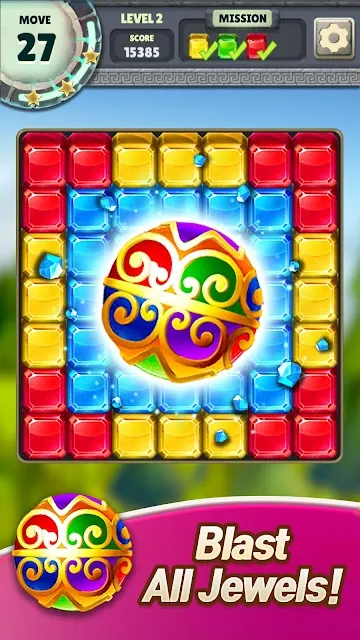
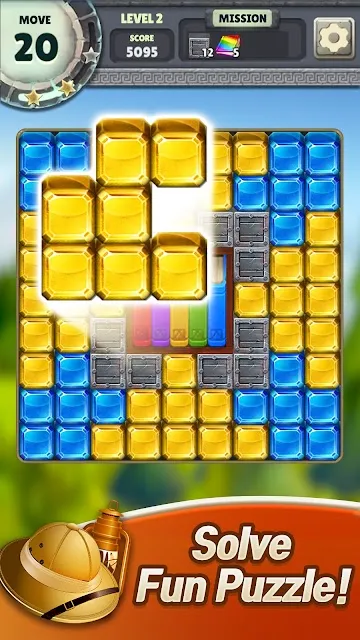
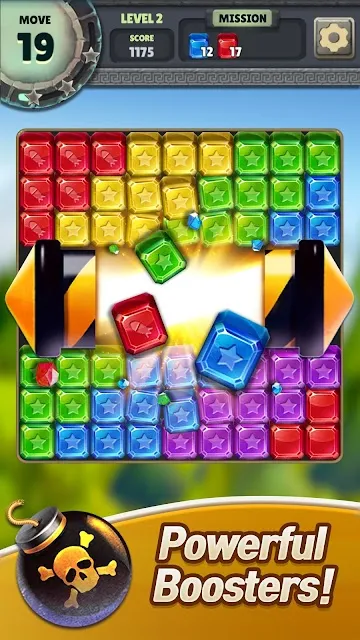
Jewel Blast : Temple, by SUPERBOX Inc
Open the listing on Google Play
Price, taxes and any fees are shown on Google Play at the next step. Listings change without notice; the date above records only when these labels were last read.
Write to us
[email protected]Email is the only channel on this site. No forms, no newsletter, no data collection anywhere on it — you write, and the reply goes back to the address you used.